Tracing Secure Data Pathways Linking Poker Tables to Daily Prize Events in Finland's Mobile Wagering Networks
Alex Zimmermann · Oct 12, 2026
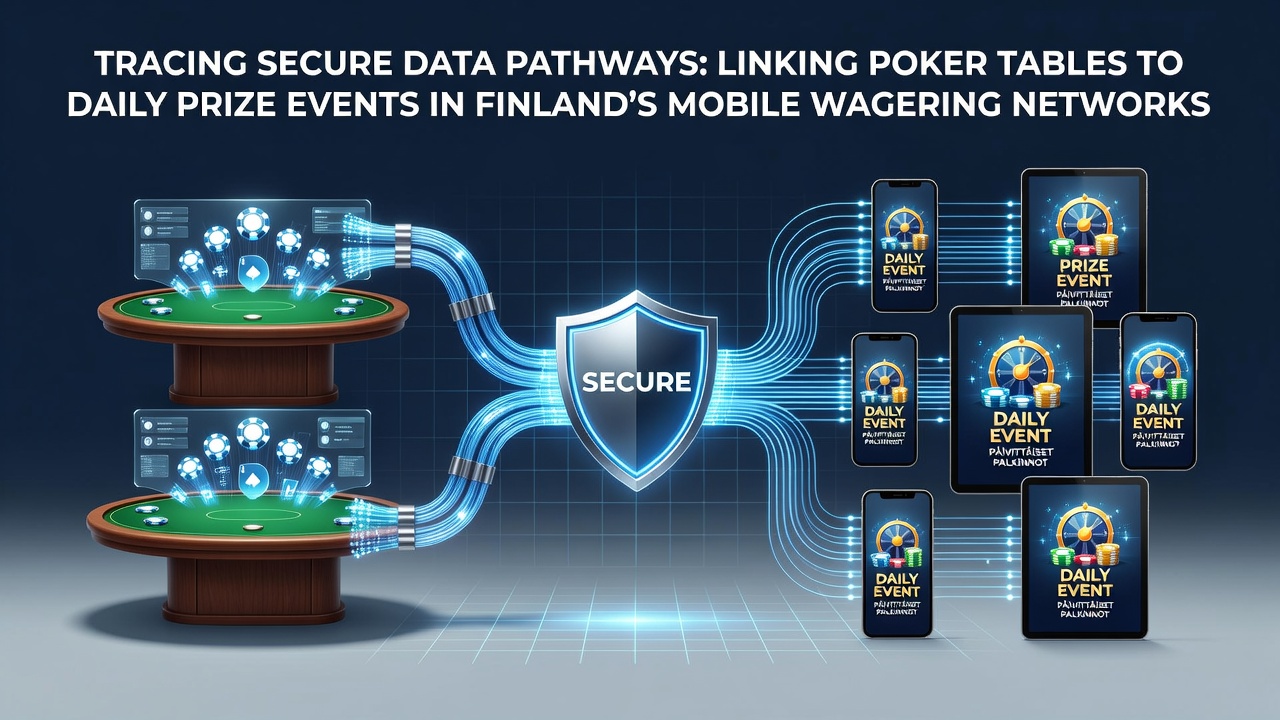
Tracing Secure Data Pathways Linking Poker Tables to Daily Prize Events in Finland's Mobile Wagering Networks
Data movement in Finland's mobile wagering networks begins at digital poker tables where player actions generate streams of game state information, and these streams travel through layered encryption protocols before reaching systems that calculate and distribute daily prizes. Observers note that each hand played creates packets containing bet amounts, card sequences, and timestamped decisions that operators must protect during transit across cellular and Wi-Fi connections.
Data Capture at Virtual Poker Tables
Operators log every action in real time through application programming interfaces that timestamp each fold, raise, or call, and the resulting records include device identifiers along with session tokens that later authenticate prize eligibility. Research indicates these initial captures occur on user devices before any transmission begins, which allows immediate validation against predefined game rules without exposing raw data to intermediate network nodes.
Encryption starts at the device level using protocols such as TLS 1.3 combined with application-specific keys that rotate every few minutes during active sessions, and this approach prevents interception even when signals cross public mobile towers. Those who've studied the architecture report that Finnish networks often integrate additional end-to-end encryption layers that wrap poker data separately from general traffic, creating distinct tunnels reserved for wagering activity.
Transmission Across Mobile Networks
Once encrypted, the packets move through Finland's 5G infrastructure where telecom operators apply traffic shaping that prioritizes low-latency gaming flows over other data types, and this prioritization helps maintain consistent timing for prize calculations that depend on precise event ordering. Data shows that routing decisions occur at edge computing nodes positioned near major population centers, reducing the physical distance each packet travels before reaching central processing servers.
Security checkpoints along these routes inspect packet headers for anomalies without decrypting content, and any flagged transmission triggers automated isolation procedures that reroute suspect flows for deeper analysis. What's interesting is how these checkpoints coordinate with national cyber defense systems that monitor broader threat patterns while leaving wagering-specific data flows under the control of licensed operators.

Integration with Daily Prize Systems
Upon arrival at aggregation servers, poker data joins streams from other game types before algorithms determine prize allocations for that day's events, and the matching process uses anonymized player identifiers that link participation records to verified accounts without exposing personal details during the computation phase. According to figures from the U.S. Cybersecurity and Infrastructure Security Agency on similar encrypted gaming environments, such segmented processing reduces the attack surface by limiting the number of systems that ever hold complete user profiles alongside financial data.
Daily prize events in Finland typically run on fixed schedules that pull aggregated results from multiple game categories at predetermined times, and the final distribution step requires a second round of cryptographic signing that confirms each prize amount before it appears in player accounts. Experts have observed that these signing ceremonies happen inside hardware security modules that never release private keys to general server environments, thereby maintaining separation between game logic and payout execution.
Developments Expected by October 2026
Network operators have scheduled upgrades to post-quantum encryption algorithms that will replace current elliptic curve methods, and these changes aim to protect long-term data archives against future computational advances. Finnish regulators have indicated that testing of these new algorithms will begin in controlled environments during the first half of 2026, with full deployment targeted for October 2026 across major mobile wagering platforms.
Additional monitoring tools will track data pathway latency in real time, allowing operators to adjust routing when congestion threatens to delay prize notifications. The Australian Cyber Security Centre has published guidance on similar latency-sensitive systems that Finnish engineers have referenced during planning sessions.
Conclusion
The pathways that carry poker table data to daily prize events rely on multiple overlapping security layers that begin at the device and continue through network routing and final payout authorization. Continued evolution of these systems, including the planned October 2026 updates, reflects ongoing efforts to maintain integrity across Finland's mobile wagering networks while supporting the operational requirements of real-time gaming and prize distribution.